
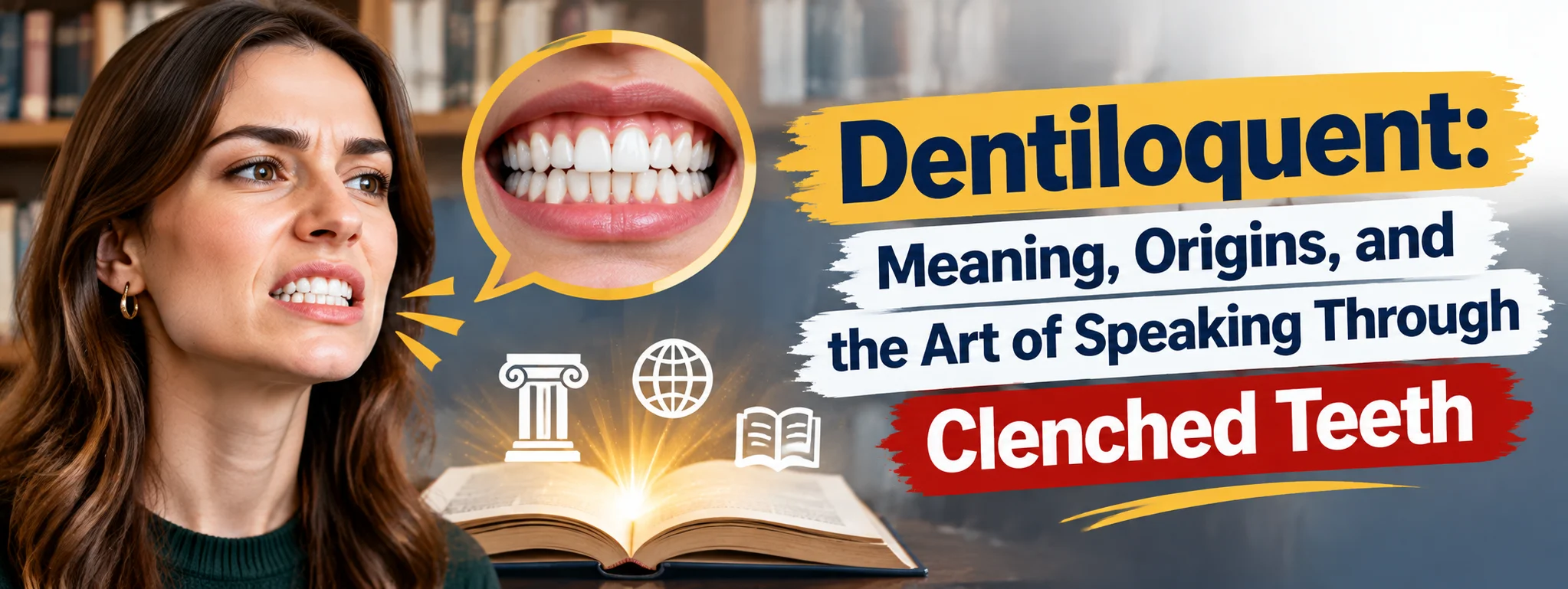
Language has a remarkable way of describing human behavior, including the small physical details that reveal tension, frustration, or restrained emotion. Dentiloquent is a rare English word that describes speaking through or between the teeth. Although most people use the familiar phrase “speaking through clenched teeth,” this unusual term offers a precise and memorable way to describe the same manner of speech.
Understanding Dentiloquent involves more than learning a definition. Its linguistic roots, historical background, and use in descriptive writing reveal how vocabulary can capture subtle moments in everyday life. From a character delivering a tense warning to someone struggling to hide irritation, the word helps writers create vivid scenes without lengthy explanations.
Dentiloquent Meaning and Definition
Dentiloquent is an uncommon adjective describing a person who speaks through the teeth, usually while keeping the jaw relatively tight or the mouth only slightly open. The word focuses on the physical manner of speaking rather than the meaning of the words themselves.
Imagine someone saying, “Everything is perfectly fine,” while holding their teeth tightly together. Their words may sound restrained, tense, or slightly muffled. This delivery illustrates the basic idea behind Dentiloquent.
The term does not automatically mean that someone is angry. A person might speak this way because of frustration, nervousness, deliberate restraint, or a particular acting technique. The surrounding situation determines how listeners interpret the behavior.
Dentiloquent in Simple English
In simple terms, Dentiloquent means talking through your teeth.
It describes a familiar action using an unusual, compact word. Instead of writing that someone spoke without opening their mouth fully, a writer can describe the person’s response as dentiloquent.
For example, consider this sentence:
“Keep your voice down,” she whispered in a dentiloquent tone.
The adjective suggests restricted speech and may create an atmosphere of tension. The reader can imagine the speaker controlling their voice while holding their jaw tight.
The Origins of Dentiloquent
The structure of Dentiloquent offers useful clues about its linguistic background. It belongs to a family of words associated with teeth and speaking.
Connections With Latin
The tooth-related element is associated with the Latin word dens, meaning “tooth,” with dentist appearing as its genitive form. The speech-related element connects with Latin loqui, meaning “to speak.”
These roots also help explain familiar English vocabulary. Words such as dental and dentist relate to teeth, while loquacious describes someone who talks a great deal.
The related noun ventriloquy refers to the act or practice of speaking through the teeth. Historical vocabulary sources record this related term, while the adjective Dentiloquent remains exceptionally uncommon in everyday English.
Historical Use and Modern Recognition
Dentiloquent is not simply a recent internet invention. Thomas Blot’s 1656 dictionary, Glossolalia, included the adjective with a definition referring to speaking through the teeth. Collins English Dictionary also records a submission for the term in its New Word Suggestion section, where it is described as “talking through one’s teeth.” Its presence in that section does not mean it has become a widely used standard dictionary entry.
This history makes Dentiloquent an interesting example of how a word can be documented for centuries without becoming part of ordinary conversation.
How Dentiloquent Speech Communicates Emotion
Speech involves more than vocabulary and grammar. Facial expressions, posture, volume, and the movement of the jaw all influence how a message is received.
Dentiloquent speech can make a scene feel especially intense because the physical delivery may contrast with the words being spoken.
Suppressed Anger and Frustration
A character who speaks through clenched teeth may be attempting to control an emotional reaction. Rather than shouting, the person delivers a short statement with a tight jaw and a restrained voice.
For example:
“He delinquently warned his colleague not to touch the equipment again.”
The sentence creates a sense of pressure without requiring the character to raise their voice.
Sarcasm and Hidden Discomfort
The same manner of speaking can also suggest sarcasm or discomfort. Someone might respond with a cheerful phrase while their facial muscles communicate irritation.
This contrast can create dramatic tension, particularly in fiction, screenplays, and dialogue-heavy scenes. However, the word itself describes the delivery, not the speaker’s precise emotional state.
Dentiloquent Examples in Everyday Writing
Writers can use Dentiloquent when they want to describe a distinctive speaking style. Because the term is rare, a little context helps readers understand it.
Examples in Sentences
- The detective gave a dentiloquent reply while examining the suspicious evidence.
- “Leave immediately,” he said in a dentiloquent voice.
- Her dentiloquent response revealed the tension beneath her otherwise calm expression.
- The actor delivered the final warning in a dentiloquent manner.
- He spoke delinquently, trying to remain composed during the uncomfortable conversation.
These examples show how the word can describe a voice, reply, or manner of speaking. In general writing, the familiar expression “through clenched teeth” may be clearer, while Dentiloquent can add a distinctive touch to literary descriptions.
Dentiloquent Compared With Similar Words
Although Dentiloquent relates to speaking, it should not be confused with other speech-related terms.
| Word | Meaning | Main distinction |
|---|---|---|
| Dentiloquent | Speaking through the teeth | Describes physical delivery |
| Loquacious | Talking a great deal | Describes talkativeness |
| Eloquent | Expressing ideas fluently and persuasively | Describes expressive skill |
| Ventriloquist | A performer who creates the illusion that a voice comes from another source | Describes a performance technique |
| Ventriloquy | The act or practice of speaking through the teeth | Names the action |
Understanding these differences helps writers select the right word for their intended meaning.
Why Is Dentiloquent Such a Rare Word?
The main reason is straightforward: English already has a familiar expression for the same behavior. Most speakers naturally say “talking through clenched teeth” rather than using an unfamiliar adjective.
Nevertheless, rare vocabulary can be valuable when it expresses an idea precisely or adds character to a piece of writing. Dentiloquent may be useful in literary descriptions, vocabulary discussions, creative storytelling, and articles about unusual English words.
The key is to use it naturally. An unfamiliar word can capture attention, but excessive use may make a passage harder to understand.
Final Thoughts
Dentiloquent is a fascinating example of the precision and variety found in English vocabulary. It describes the familiar act of speaking through the teeth while offering a distinctive alternative to a longer everyday expression.
Its linguistic roots and historical record make it particularly interesting to language enthusiasts and writers. More importantly, the word highlights how physical delivery can influence the meaning and emotional impact of communication.
Whether describing a tense conversation, a restrained warning, or a dramatic fictional character, Dentiloquent can add vivid detail when used thoughtfully. Understanding its meaning and limitations allows writers to use this rare word with confidence while keeping their message clear.
Frequently Asked Questions
1. What does Dentiloquent mean?
Dentiloquent means speaking through or between the teeth, usually with limited jaw movement.
2. Is Dentiloquent a real English word?
Yes. It is a historically documented but extremely rare English adjective.
3. Where does Dentiloquent originate?
Its structure is associated with Latin roots relating to teeth and speaking.
4. Does Dentiloquent always mean someone is angry?
No. It describes a manner of speaking. Anger or frustration may be suggested by context but is not essential to the definition.
5. How can I use Dentiloquent in a sentence?
You could write, “She delivered a dentiloquent warning while trying to control her frustration.”