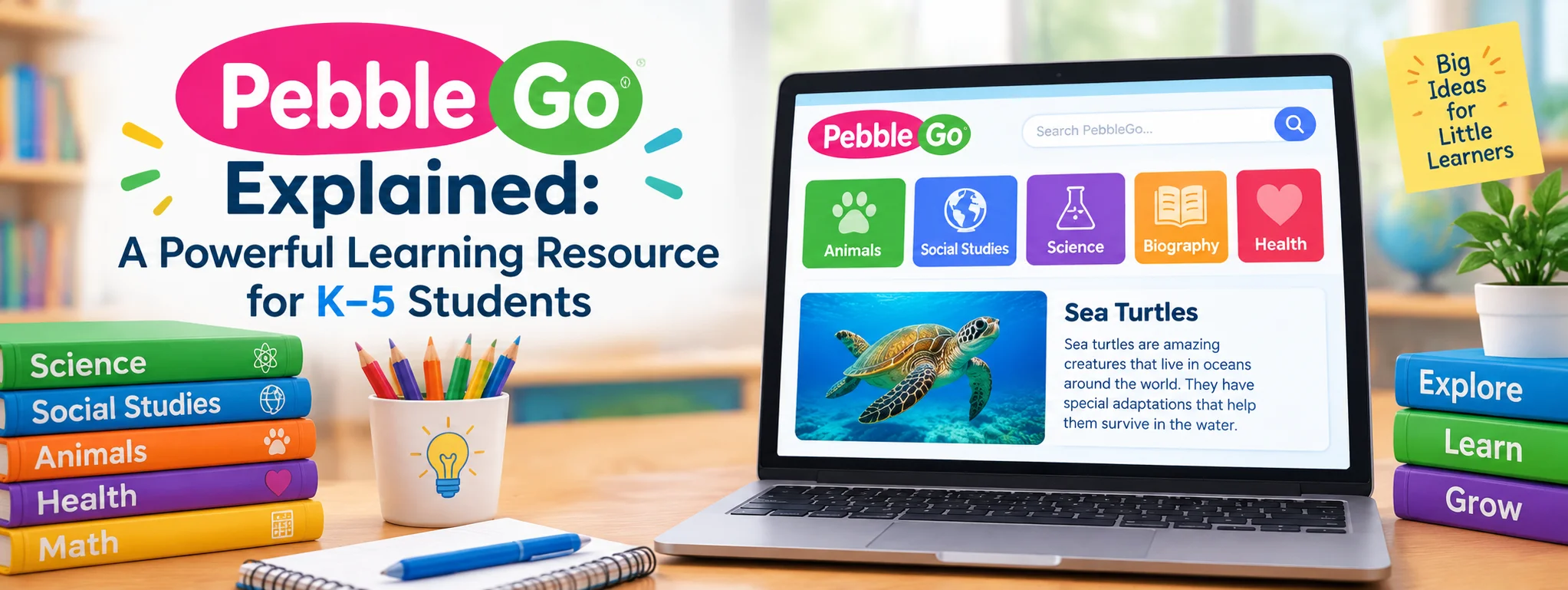
Pebble Go is a digital learning resource designed to help elementary school students explore new subjects, improve reading skills, and build confidence through engaging educational content. Created for young learners, PebbleGo combines age-appropriate articles, read-aloud audio, images, videos, and interactive activities to make learning more accessible and enjoyable.
For students in kindergarten through fifth grade, finding reliable information can be challenging. Traditional textbooks sometimes feel overwhelming, while unrestricted internet searches can expose children to information that is too advanced or difficult to understand. PebbleGo addresses this challenge by providing an educational environment designed around the needs of young readers.
Teachers can use the platform to introduce classroom topics, support independent research, and encourage curiosity. Parents can also explore its learning opportunities through participating schools and libraries that provide access.
What Is PebbleGo?
PebbleGo is an educational digital content platform developed for elementary learners. It provides nonfiction articles and supporting resources that help children develop literacy, vocabulary, background knowledge, and research skills.
The platform is particularly associated with early elementary education, while PebbleGo Next extends learning opportunities for older elementary students. Its content is organized into clear subject areas, allowing children to explore topics without navigating complicated menus.
One of its most valuable features is its combination of reading and multimedia learning. Students can read articles, listen to text, view relevant images, and explore additional activities that reinforce important concepts.
PebbleGo is designed to support both classroom instruction and independent exploration. Instead of simply presenting information, it encourages students to ask questions, investigate subjects, and explain what they have learned.
Quick Facts About Pebble Go
| Feature | Details |
| Platform name | PebbleGo |
| Main audience | Elementary school students |
| Grade range | Kindergarten through fifth grade, depending on the product |
| Primary purpose | Reading, research, and subject learning |
| Content format | Articles, audio, images, videos, and activities |
| Main subjects | Animals, science, health, biographies, and social studies |
| Language options | English and Spanish content in core modules |
| Typical access | School or library subscription |
| Learning environment | Digital and classroom-based |
| Main benefits | Literacy, curiosity, comprehension, and research skills |
The exact content and available tools depend on the school’s subscription and the version of the platform being used.
How Does Pebble Go Help K–5 Students Learn?
Pebble Go supports learning by presenting information in a format that young students can understand and explore independently. Its design combines reading support, visual content, and guided research to make unfamiliar topics less intimidating.
1. Age-Appropriate Educational Articles
The platform provides nonfiction articles written for developing readers. These articles introduce important ideas using accessible language and organized sections.
For example, a student researching butterflies can explore their life cycle, habitat, diet, and physical characteristics. Instead of searching through lengthy academic material, the child can begin with information suited to elementary learning.
2. Read-Aloud Audio
Read-aloud audio allows students to listen to article text while following along. This feature can help children recognize unfamiliar words, understand pronunciation, and develop reading fluency.
It is especially valuable for students who are still learning to read independently or who benefit from hearing information as they process it.
3. Images, Videos, and Interactive Activities
Visual resources help transform abstract information into something easier to understand. Photographs, illustrations, videos, and interactive learning activities can reinforce important concepts.
A science lesson about the solar system, for instance, becomes more engaging when students can connect written explanations with visual representations of planets and space.
4. Vocabulary Development
Children encounter new words while exploring subjects such as biology, geography, history, and health. PebbleGo provides vocabulary support that helps students understand unfamiliar terminology in context.
This approach strengthens comprehension and helps learners gradually build the academic language they need for more advanced reading.
Main PebbleGo Subjects and Learning Modules
PebbleGo organists its resources into subject-based modules. The standard platform includes five core areas, while PebbleGo Next provides additional content for older elementary learners.
| Subject | What Students Can Explore | Learning Benefits |
| Animals | Habitats, animal behavior, and life cycles | Builds scientific curiosity |
| Science | Nature, physical science, and scientific concepts | Develops observation and reasoning |
| Biographies | Important people and their achievements | Introduces historical understanding |
| Health | Healthy habits, the body, and personal well-being | Encourages health awareness |
| Social Studies | Communities, cultures, and society | Builds civic and cultural knowledge |
| Indigenous Peoples’ History | Indigenous histories and perspectives | Broadens historical understanding |
| States | U.S. states, geography, and related facts | Develops geographic knowledge |
Module availability varies by product and subscription. PebbleGo Next expands the learning experience with additional topics and more advanced content appropriate for older elementary students.
What Makes PebbleGo Different From Other Learning Websites?
Many educational websites provide articles, videos, and activities. PebbleGo brings several of these elements together in an environment designed specifically for young learners.
Simple Navigation for Independent Learning
Children do not always know how to search effectively or evaluate complicated information. PebbleGo uses a straightforward, visually guided structure that helps students move from broad subjects to specific topics.
This encourages independence without requiring advanced digital research skills.
Support for Different Learning Needs
Students develop reading skills at different rates. Some benefit from listening to text, while others prefer visual explanations or reading independently.
PebbleGo’s combination of text, audio, and visual material provides different ways to engage with information. English-language learners and students who need additional reading support may particularly benefit from these features.
English and Spanish content is available across the core modules, supporting bilingual learning where appropriate.
A More Focused Research Environment
Unrestricted internet searches can produce irrelevant results, distracting advertisements, and information that is too complex for young children.
PebbleGo provides a more focused environment built around educational topics. This makes it easier for teachers to direct research activities and help children concentrate on relevant information.
However, students should still develop the habit of checking facts and understanding where information comes from.
How Teachers Can Use Pebble Go in the Classroom
PebbleGo can support lessons across several subjects. Teachers can use it to introduce new concepts, reinforce textbook learning, or provide opportunities for independent research.
Science Research Projects
Students can select an animal, investigate its habitat, and record three important facts. They can then use their findings to create a poster or short presentation.
Reading and Writing Activities
After reading an article, students can summaries the main idea, identify unfamiliar vocabulary, and write a short paragraph explaining what they learned.
Social Studies Lessons
Teachers can use biographies and community-related topics to introduce historical figures, cultural traditions, and important social concepts.
Five Practical Ways to Improve Learning With PebbleGo
- Start with a question: Give students a clear research question before they open an article.
- Encourage active reading: Ask learners to identify important facts rather than simply scrolling through content.
- Combine reading and listening: Let developing readers use audio support when needed.
- Create a learning project: Turn research findings into a poster, worksheet, or short presentation.
- Review understanding: Ask students to explain the topic in their own words.
These activities help children move beyond collecting information and begin developing stronger comprehension and critical-thinking skills.
Is PebbleGo Free to Use?
PebbleGo is generally offered through school and library subscriptions rather than as a completely free service for every user.
Students may receive access through their school, district, or participating library. Login procedures vary, and some institutions provide automatic sign-in through their educational systems.
The platform also offers different subscription options, so available modules, activities, and administrative tools depend on the selected plan.
Parents who want their children to use PebbleGo should check whether their school or local library already provides access before considering a separate subscription.
Is PebbleGo Safe for Children?
PebbleGo is designed as an educational platform for young learners, with age-appropriate content and a focused learning environment.
Its structure can help reduce some of the distractions associated with general internet browsing. The provider also describes privacy protections and compliance measures intended for school use.
Nevertheless, parents and teachers should review their institution’s access arrangements and privacy policies. Children should also learn basic digital safety habits, including protecting personal information and asking a trusted adult for help when something seems unfamiliar.
What Are the Limitations of PebbleGo?
Although PebbleGo can be a valuable educational resource, it does not replace every learning tool.
Some limitations include:
- Access may require a school or library subscription.
- Available subjects and activities depend on the selected plan.
- Students still need guidance to develop deeper research and evaluation skills.
- Digital learning works best when balanced with books, discussion, writing, and hands-on activities.
Teachers can address these limitations by combining PebbleGo with classroom instruction, library resources, experiments, and collaborative projects.
Final Thoughts
PebbleGo is a useful digital learning resource that helps K–5 students explore educational topics, strengthen reading comprehension, and develop early research skills. Its age-appropriate articles, read-aloud audio, visual resources, and subject-based modules create an accessible learning experience for young children.
For teachers, it offers practical ways to connect reading with science, health, biographies, and social studies. For students, it provides an inviting starting point for investigating questions and discovering new ideas.
Frequently Asked Questions
1. What is Pebble Go used for?
PebbleGo helps elementary students read nonfiction articles, explore school subjects, build vocabulary, and practice early research skills.
2. What grades is PebbleGo designed for?
The platform serves elementary learners, with PebbleGo supporting early grades and PebbleGo Next extending learning into the upper elementary years.
3. Is PebbleGo free?
Access is generally provided through school or library subscriptions. Availability and included features depend on the institution’s plan.
4. What subjects does PebbleGo cover?
Core subjects include animals, science, biographies, health, and social studies. PebbleGo Next offers additional modules for older students.
5. Can students use PebbleGo at home?
Yes, when their school or library subscription allows home access. Students may need institution-provided login credentials to sign in.
2 Replies to “PebbleGo Explained: A Powerful Learning Resource for K–5 Students”