
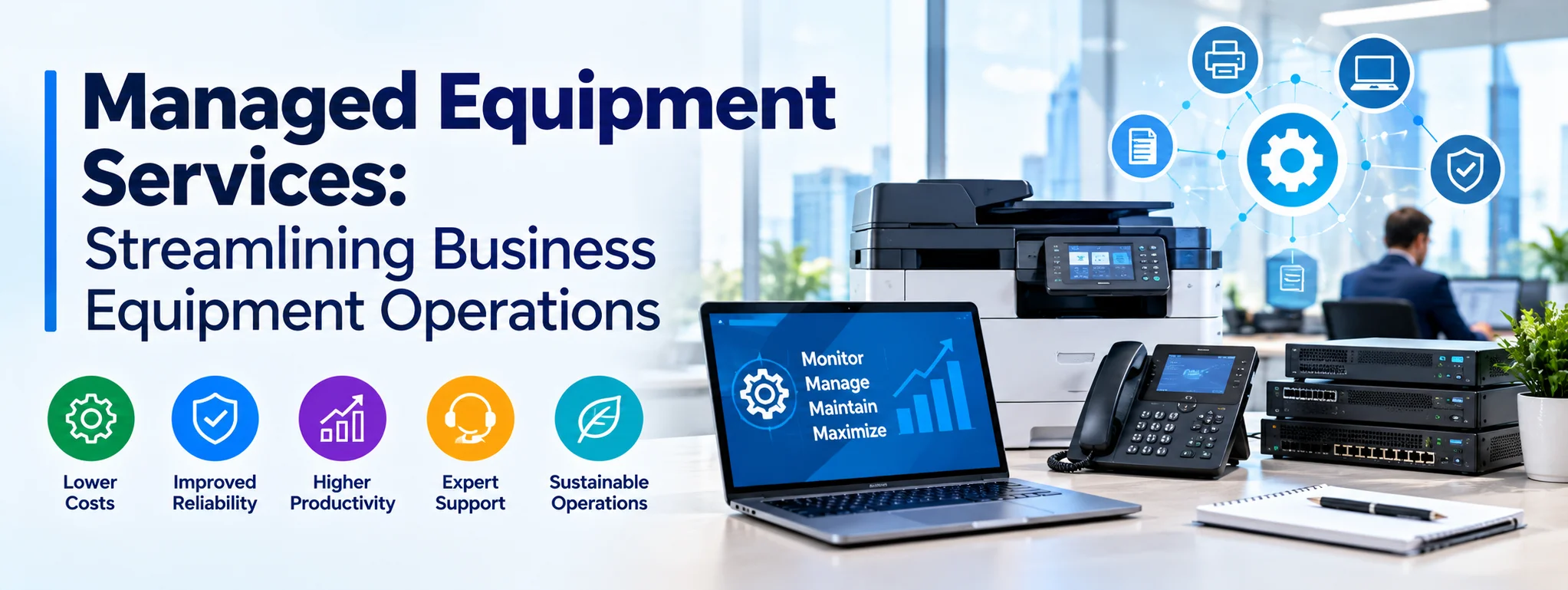
Modern businesses depend on reliable equipment to maintain productivity, control expenses, and deliver consistent results. From healthcare facilities and manufacturing plants to offices, laboratories, and educational institutions, equipment plays a vital role in everyday operations. Managed Equipment Services offer a structured approach to managing these essential resources by combining equipment planning, maintenance, technical support, and life cycle management under a coordinated service arrangement.
Instead of handling every equipment-related responsibility separately, businesses can work with a service provider to simplify operations and improve performance. This approach can reduce administrative pressure, support better budgeting, and help organizations focus on their primary objectives.
What Are Managed Equipment Services?
Managed Equipment Services are arrangements in which a specialist provider takes responsibility for selected aspects of an organization’s equipment requirements. Depending on the agreement, services may include procurement, installation, maintenance, repairs, technical support, upgrades, and equipment replacement.
The goal is to create a coordinated system that keeps equipment available, functional, and appropriate for business needs.
How Managed Equipment Services Work
The process typically begins with an assessment of existing equipment, operational requirements, and future plans. The provider then develops a service strategy covering equipment selection, maintenance schedules, support arrangements, and replacement planning.
Responsibilities are defined in a contract, allowing the organization to understand which tasks the provider manages and which remain internal.
For example, a healthcare facility may use managed services to coordinate medical equipment maintenance and technical support. A manufacturing company might use a similar arrangement to maintain production machinery and reduce unexpected interruptions.
The exact services depend on the industry, equipment type, and agreement.
Key Features of Managed Equipment Services
A well-designed service arrangement combines several activities into one coordinated framework.
Equipment Planning and Procurement
Choosing the right equipment requires careful consideration of performance, cost, compatibility, and long-term requirements. A managed service provider can help assess available options and develop a procurement plan that supports operational goals.
This planning may prevent unnecessary purchases and reduce the risk of investing in equipment that quickly becomes outdated.
Maintenance and Technical Support
Routine maintenance helps identify potential problems before they cause serious disruption. Depending on the contract, providers may arrange inspections, servicing, troubleshooting, and repairs.
Technical support can also help employees resolve equipment issues more efficiently, reducing the burden on internal teams.
Life cycle and Replacement Management
Equipment has a useful operating life, after which repair costs, performance limitations, or compatibility issues may make replacement necessary.
Managed Equipment Services can help organizations track equipment condition, estimate replacement needs, and plan upgrades. This forward-looking approach supports better financial planning and reduces the likelihood of sudden, expensive decisions.
Major Benefits of Managed Equipment Services
Organizations adopt managed equipment arrangements for several practical reasons. The benefits depend on the provider’s capabilities and the quality of the agreement.
1. Better Cost Control
Equipment expenses extend beyond the initial purchase price. Maintenance, spare parts, repairs, staff training, and eventual replacement can significantly increase the total cost of ownership.
A coordinated service arrangement can make these expenses easier to forecast and manage. Some contracts offer predictable service payments, although pricing structures and included services vary.
2. Improved Operational Efficiency
When equipment maintenance and support follow a defined process, employees spend less time coordinating different suppliers and arranging individual repairs.
This streamlined approach can improve internal workflows and allow staff to concentrate on essential business activities.
3. Reduced Equipment Downtime
Unexpected equipment failure can interrupt production, delay services, and frustrate customers. Preventive maintenance and clearly defined support procedures can help reduce the likelihood and duration of certain disruptions.
However, no provider can guarantee that every equipment failure will be prevented. Effective planning and realistic service commitments remain essential.
4. Access to Specialist Expertise
Equipment often requires technical knowledge that an organization may not have internally. External specialists can provide maintenance expertise, troubleshooting assistance, and guidance on equipment upgrades.
This support is particularly valuable when systems are complex or require specialized servicing.
5. Easier Long-Term Planning
A managed arrangement can provide a clearer view of equipment condition, future replacement requirements, and expected maintenance costs. This information supports budgeting and helps organizations prepare for changing operational demands.
Industries That Use Managed Equipment Services
Managed equipment arrangements can support a wide range of sectors.
Healthcare and Medical Facilities
Hospitals and clinics rely on equipment that must function reliably and meet applicable safety requirements. Managed services can coordinate maintenance, technical support, inspections, and replacement planning for eligible medical equipment.
Manufacturing and Industrial Operations
Manufacturers depend on machinery, production tools, and supporting systems. Planned servicing and repair coordination can help maintain production schedules and minimize avoidable interruptions.
Offices and Educational Institutions
Offices, schools, and universities use computers, printers, laboratory equipment, and other operational resources. Coordinated management can simplify support requests and improve equipment planning across multiple departments.
Managed Equipment Services vs. Traditional Equipment Management
The main difference is how responsibilities are organized. Traditional equipment management often relies on internal teams coordinating purchases, maintenance, and repairs separately. Managed services combine selected responsibilities under an agreed service framework.
| Factor | Traditional management | Managed equipment services |
| Equipment planning | Primarily handled internally | May be coordinated with a provider |
| Maintenance | Internal staff or separate contractors | Managed under an agreed service plan |
| Cost planning | Expenses may be spread across suppliers | May offer consolidated pricing |
| Technical support | Depends on internal resources | May include specialist assistance |
| Replacement planning | Managed by the organization | Can be included in lifecycle planning |
Neither approach is automatically better for every business. The right choice depends on equipment complexity, internal expertise, available budgets, and operational priorities.
How to Choose the Right Managed Equipment Services Provider
Selecting a provider requires more than comparing prices. Businesses should examine service quality, technical capability, contractual responsibilities, and long-term suitability.
- Assess experience: Look for relevant industry knowledge and experience with the equipment involved.
- Review service agreements: Check response times, maintenance responsibilities, exclusions, and performance measures.
- Compare total costs: Consider service fees, additional charges, replacement costs, and contract duration.
- Check security and compliance: Confirm how the provider handles sensitive information and applicable industry requirements.
- Plan for continuity: Establish procedures for emergencies, equipment failure, and service-provider transitions.
A clear contract should also explain ownership arrangements, data access, reporting requirements, and how disputes or service failures will be handled.
Final Thoughts
Managed Equipment Services provide businesses with a practical way to coordinate equipment procurement, maintenance, technical support, and life cycle planning. By bringing selected responsibilities together, organizations can improve visibility, simplify administration, and make more informed decisions about essential resources.
The strongest results come from choosing a suitable provider, setting realistic performance expectations, and establishing clear contractual responsibilities. Although managed services cannot eliminate every equipment problem or guarantee lower costs in every situation, they can create a more structured approach to managing operational assets.
Frequently Asked Questions
1. What are Managed Equipment Services?
They are service arrangements that coordinate equipment-related activities such as procurement, maintenance, repairs, technical support, and replacement planning.
2. Which industries benefit from Managed Equipment Services?
Healthcare, manufacturing, education, laboratories, and office-based businesses may benefit, depending on their equipment requirements.
3. Can Managed Equipment Services reduce costs?
They can improve cost visibility and planning, but actual savings depend on contract terms, equipment needs, and service quality.
4. Do these services include equipment replacement?
Some agreements include life cycle and replacement planning. The exact responsibilities depend on the contract.
5. How do businesses select a provider?
Compare industry experience, service coverage, pricing, technical expertise, contractual terms, and relevant compliance requirements.
One Reply to “Managed Equipment Services: Streamlining Business Equipment Operations”