
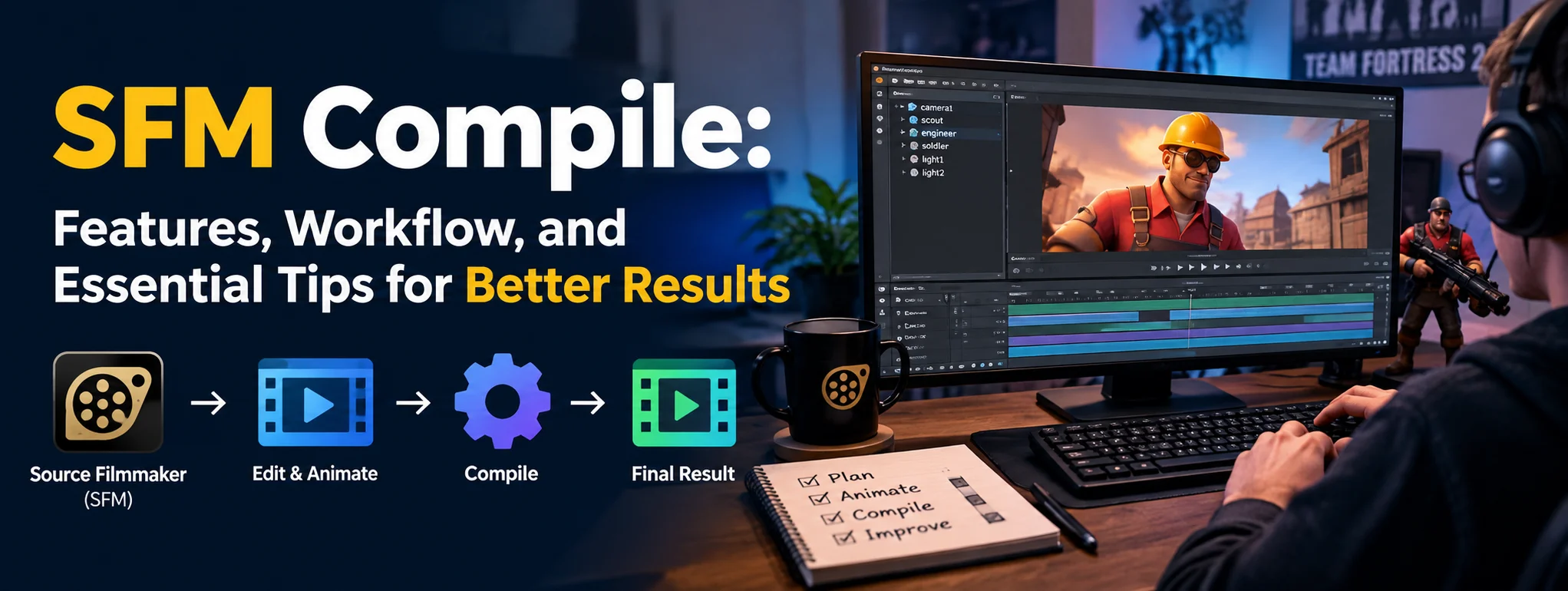
SFM Compile is a term commonly associated with compiling and preparing projects created in Source Filmmaker (SFM), a 3D animation tool used to produce animated scenes, cinematic videos, character performances, and visual storytelling projects. For creators who want polished results, understanding the compilation process can make a significant difference in how smoothly a project moves from editing to its final output.
Source Filmmaker allows users to work with characters, cameras, lighting, models, and animations within a virtual environment. However, creating a scene is only one part of the process. Preparing the project, checking its assets, organizing the timeline, and producing the final video all require attention to detail.
What Does SFM Compile Mean?
The phrase SFM Compile can refer broadly to preparing, processing, or exporting a Source Filmmaker project. Its exact meaning depends on the context in which it appears.
Source Filmmaker does not use one universal command called “SFM Compile” for every stage of animation production. Instead, creators work with different processes depending on whether they are preparing assets, resolving project problems, rendering image sequences, or creating a finished video.
Understanding Source Filmmaker
Source Filmmaker, developed by Valve, is a film making application built around the Source game engine. It enables creators to stage virtual scenes using characters, props, animation controls, cameras, and lighting.
Unlike conventional video editing software, SFM lets users manipulate elements inside a three-dimensional environment. A creator can position a character, adjust facial expressions, animate movement, and control the camera before rendering the scene.
Why Compilation Matters
Preparing a project correctly helps ensure that its resources and settings work together as intended. Missing models, incompatible assets, incorrect paths, and rendering mistakes can interrupt production or affect the final result.
A reliable workflow makes it easier to identify problems early, protect project files, and maintain consistent quality throughout the production process.
SFM Compile Features and Core Capabilities
The specific features involved in an SFM Compile workflow depend on the task being performed. Several core areas deserve attention when preparing a project for a successful final output.
1. Asset Preparation
Models, materials, textures, sound files, and other resources contribute to the appearance and behavior of an animated scene. Before working toward a final render, check that the required assets are available and functioning correctly.
Custom models and community-created resources may require additional setup. Using compatible files and keeping assets organized can prevent unexpected visual errors.
2. Animation and Timeline Management
The animation timeline determines when characters move, cameras change position, and events occur within a scene. Carefully arranging animation clips and checking transitions can improve pacing and continuity.
Creators should review key frames, movement, facial expressions, and timing before rendering. Even a visually impressive scene may feel unnatural when actions begin too early or transitions appear abrupt.
3. Camera and Lighting Controls
Camera placement and lighting strongly influence the final appearance of an animation. A well-positioned camera can direct attention toward important details, while balanced lighting helps establish atmosphere and depth.
Review camera movement, exposure, shadows, and framing before committing to a full render. Small adjustments can transform an ordinary scene into a more compelling cinematic experience.
4. Rendering and Output Preparation
Rendering converts the scene into visual output that can be reviewed and assembled into a finished video. Depending on the project, creators may render image sequences and combine them with appropriate editing or encoding tools.
The best settings depend on the intended resolution, frame rate, project complexity, and available hardware. Test a short section before processing a lengthy animation.
5. Error Checking and Quality Control
A final review helps identify missing textures, unexpected animation changes, visual glitches, and audio synchronization problems.
Checking these details before exporting the complete project can save considerable time and prevent disappointing results.
SFM Compile Workflow: A Step-by-Step Guide
A structured workflow makes animation production easier to manage, especially when a project includes multiple characters, complicated camera movements, or detailed environments.
Step 1: Prepare the Project
Open the project and verify that the scene loads correctly. Confirm that the required models, materials, maps, and other resources appear as expected.
Save a separate working copy before making significant changes. This provides a recovery point if an edit or asset replacement causes unexpected problems.
Step 2: Organize the Scene
Arrange models, props, lighting, and cameras in a logical structure. Clear organization makes it easier to locate individual elements and understand how different parts of the scene interact.
Give project files descriptive names and avoid unnecessary duplication of assets.
Step 3: Review Animation and Timing
Play through the complete timeline, paying attention to character movement, facial animation, camera transitions, and scene pacing.
Correct awkward poses and inconsistent timing before proceeding. It is easier to repair these issues during editing than after rendering a long sequence.
Step 4: Test the Render
Render a short section to check image quality, lighting, animation smoothness, and performance. A test render can reveal problems that are difficult to notice while navigating the editing interface.
Once the results look correct, select suitable settings for the complete sequence.
Step 5: Export and Inspect the Final Output
After rendering, review the resulting footage from beginning to end. Check for missing frames, visual artifacts, audio problems, and unwanted transitions.
If the final output needs additional editing or encoding, use an appropriate video tool to complete the process.
Essential Tips for Better SFM Compile Results
Small improvements to your workflow can make your final animation look sharper and more professional. Use these practical techniques to avoid common mistakes.
Improve Visual Quality
Pay attention to lighting, camera composition, and render settings. Increasing every quality setting to its maximum is not always necessary; the right balance depends on the scene and your computer’s capabilities.
Manage Rendering Time
Complex scenes with multiple lights, detailed models, and motion effects can take considerable time to render. Test short sections and adjust settings before processing the entire animation.
Keep Files Organized
Save image sequences, audio files, project sessions, and exported videos in clearly labeled folders. This simple habit makes revisions easier and reduces the risk of overwriting important work.
Five Essential Tips to Remember
- Save your project regularly and maintain backup copies.
- Check models, materials, and textures before rendering.
- Preview animation timing and camera movements carefully.
- Use image sequences when you need greater flexibility during post-production.
- Review the final video for visual errors and audio synchronization.
Common SFM Compile Problems and Solutions
Even carefully prepared projects can encounter technical difficulties. Identifying the cause early can save time and frustration.
| Problem | Possible cause | Recommended solution |
| Missing textures | Incorrect material paths | Verify texture and material files |
| Black frames | Camera or scene configuration issues | Check the active camera and timeline |
| Slow rendering | Complex scenes or demanding settings | Reduce unnecessary effects and test lower settings |
| Choppy animation | Inconsistent timing or playback settings | Review key frames and export frame rate |
| Incomplete output | Interrupted rendering or insufficient storage | Check available disk space and re render missing sections |
Some problems may have multiple causes, so change one setting at a time and test the result. This approach makes troubleshooting more reliable.
Final Thoughts
SFM Compile is an important concept for creators who want to turn their Source Filmmaker projects into polished animations, videos, and still images. Understanding the preparation, rendering, and export stages helps reduce technical problems while improving the quality of the final result.
The most effective approach combines organized project files, careful animation editing, appropriate render settings, and thorough quality checks. Beginners can start with short scenes and gradually experiment with more complex lighting, camera movement, and effects.
With patience and a consistent workflow, you can overcome frustrating errors, improve your creative confidence, and produce compelling animations that communicate your ideas effectively.
Frequently Asked Questions
1. What does SFM Compile mean?
It generally refers to preparing Source Filmmaker assets or rendering a completed animation into a usable output.
2. Is SFM Compile suitable for beginners?
Yes. Beginners can start with simple scenes, learn the rendering process, and gradually explore advanced techniques.
3. Why does SFM rendering take so long?
Complex models, lighting, effects, resolution, and sampling settings can increase rendering time.
4. Is an image sequence better than direct video export?
An image sequence offers greater flexibility for editing and recovering from interrupted renders, although it requires additional storage and post-production.
5. How can I improve my SFM Compile results?
Organize your files, test short renders, check your animation, optimize settings, and inspect the final output carefully.
3 Replies to “SFM Compile: Features, Workflow, and Essential Tips for Better Results”