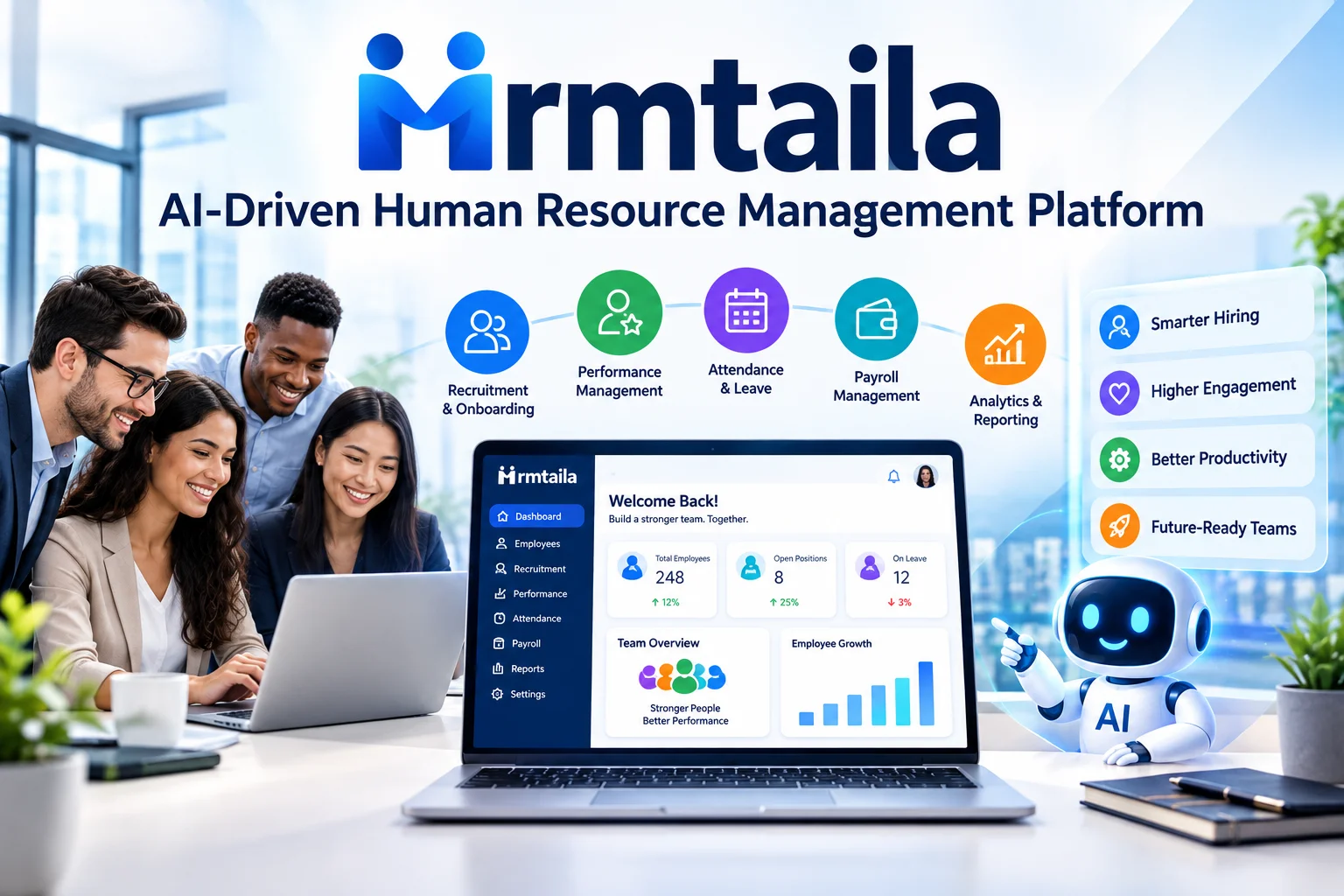
Hrmtaila is an emerging AI-driven human resource management concept focused on making HR activities more organized, efficient, and data-informed. Modern organizations manage large amounts of employee information, recruitment records, on boarding tasks, attendance details, and workplace communication. A platform built around artificial intelligence can help bring these activities into a more connected digital environment. Hrmtaila reflects the growing movement toward intelligent HR technology that can reduce repetitive work while helping teams focus on people and business goals.
Hrmtaila and Modern HR Management
Human resource departments handle responsibilities that directly affect an organization’s workforce. Recruitment, employee records, on boarding, performance monitoring, scheduling, and internal communication can require considerable time when managed through disconnected systems.
Hrmtaila represents an approach where AI and automation can support these processes through a centralized digital platform. Instead of treating each HR activity separately, intelligent technology can connect information and create smoother workflows.
AI in Human Resources
Artificial intelligence is increasingly being used to support administrative and analytical HR tasks. Depending on the platform, AI can help organize information, identify patterns, generate documents, answer routine questions, and assist HR professionals with repetitive workflows.
The goal is not necessarily to remove human involvement. Instead, intelligent systems can give HR teams more time to focus on communication, employee development, workplace culture, and strategic planning.
Key Areas Supported by Hrmtaila
An AI-driven HR platform can cover several important stages of the employee life cycle. The exact capabilities depend on implementation, but a connected system can provide valuable support across multiple functions.
Recruitment and Candidate Management
Recruitment often involves reviewing applications, organizing candidate information, communicating with applicants, and coordinating interviews. AI-powered tools can help structure these activities and reduce repetitive administrative work.
For example, intelligent software may organize candidate profiles according to predefined criteria or help recruiters manage interview schedules. Human review remains important because recruitment decisions can involve context, experience, communication skills, and organizational requirements that automated systems may not fully understand.
Employee On boarding
The on boarding process can involve forms, documentation, training schedules, account setup, and introductions to workplace policies. A digital platform can place these tasks into an organized workflow.
Hrmtaila can be viewed as part of this broader movement toward automated on boarding. Clear task assignments and timely notifications can create a smoother experience for both new employees and HR teams.
Important Features of an AI-Driven HR Platform
A modern HR platform can combine several capabilities within one digital environment.
Five useful areas include:
- Employee information management: Centralized records can make important workforce information easier to organize.
- Recruitment assistance: Digital workflows can help manage applications and candidate communication.
- Automated on boarding: Notifications and task lists can reduce manual follow-up.
- Workforce analytics: Data analysis can reveal useful patterns related to staffing and workplace activity.
- HR communication: Centralized systems can help employees access information and submit routine requests.
How AI Can Improve HR Workflows
AI can make HR operations more efficient by handling repetitive activities and organizing large amounts of information. A system may automatically categorize records, generate summaries, or provide responses to common employee questions.
Reducing Administrative Work
Many HR tasks are repetitive but necessary. Updating records, sending reminders, organizing documents, and answering frequently asked questions can consume significant working hours.
Automation can reduce this burden. HR professionals can then dedicate more attention to complex responsibilities such as employee engagement, conflict resolution, training, and workforce planning.
Supporting Data-Based Decisions
Human resource teams increasingly rely on workforce data to understand organizational needs. Analytics can help identify patterns in recruitment, employee turnover, attendance, and workforce development.
However, data should be interpreted carefully. AI-generated recommendations should support professional judgment rather than automatically determine important employment decisions.
Hrmtaila Feature Overview
| HR Area | AI or Digital Support | Potential Benefit |
| Recruitment | Candidate organization | More structured workflows |
| Onboarding | Automated task management | Smoother employee integration |
| Employee Records | Centralized information | Easier information access |
| Analytics | Pattern identification | Better workforce insights |
| Communication | Automated responses | Faster routine support |
Security and Responsible HR Technology
Because HR systems contain sensitive employee information, security should be a fundamental consideration. Personal records, employment documents, compensation information, and organizational data require appropriate protection.
Protecting Employee Information
A responsible HR platform should use appropriate access controls so employees and managers can only view information relevant to their roles. Secure authentication, data encryption, activity monitoring, and regular system maintenance can further strengthen protection.
Organizations should also establish clear policies for how employee information is collected, stored, processed, and retained.
Maintaining Human Oversight
AI can provide useful recommendations, but employment decisions often have significant consequences. Human oversight is important when technology is involved in recruitment, performance evaluation, promotions, or other sensitive processes.
Transparent workflows can help employees understand how technology is being used and provide opportunities for human review when necessary.
The Future of AI-Powered HR
The future of human resource technology is likely to involve increasingly intelligent automation. HR platforms may become better at understanding workforce data, supporting personalized employee experiences, and connecting different organizational systems.
Hrmtaila represents this broader shift toward AI-supported HR management. As organizations adopt more digital tools, successful implementation will depend on balancing automation with privacy, transparency, security, and meaningful human interaction.
Why Digital HR Platforms Matter
Organizations are under constant pressure to improve efficiency while maintaining a positive employee experience. A well-designed HR platform can provide a centralized environment where information and workflows are easier to manage.
The strongest value comes when technology solves genuine operational problems rather than simply adding another layer of complexity.
Final Thoughts
Hrmtaila reflects the growing interest in AI-driven human resource management platforms designed to simplify recruitment, on boarding, employee information management, analytics, and communication. By combining automation with intelligent data processing, modern HR technology can help teams reduce repetitive work and create more organized workflows.
At the same time, responsible implementation remains essential. Employee privacy, security, transparency, and human oversight should remain central to any AI-based HR strategy. When these principles are considered carefully, digital HR platforms can become a powerful tool for building more efficient and connected workplaces.
FAQs
1. What is Hrmtaila used for?
Hrmtaila is associated with AI-driven HR management and can support activities such as recruitment, on boarding, employee records, and workforce analytics.
2. How can AI help HR teams?
AI can automate repetitive tasks, organize information, generate summaries, and identify useful patterns in workforce data.
3. Can AI replace HR professionals?
AI is primarily a support technology. Human professionals remain important for communication, judgment, employee relations, and sensitive decisions.
4. Why is HR data security important?
HR systems can contain sensitive employee information, making access control, secure storage, and responsible data handling essential.
5. Can Hrmtaila improve on boarding?
An AI-driven platform can help organize on boarding tasks, reminders, documentation, and communication into a structured workflow.
2 Replies to “Hrmtaila: AI-Driven Human Resource Management Platform”