
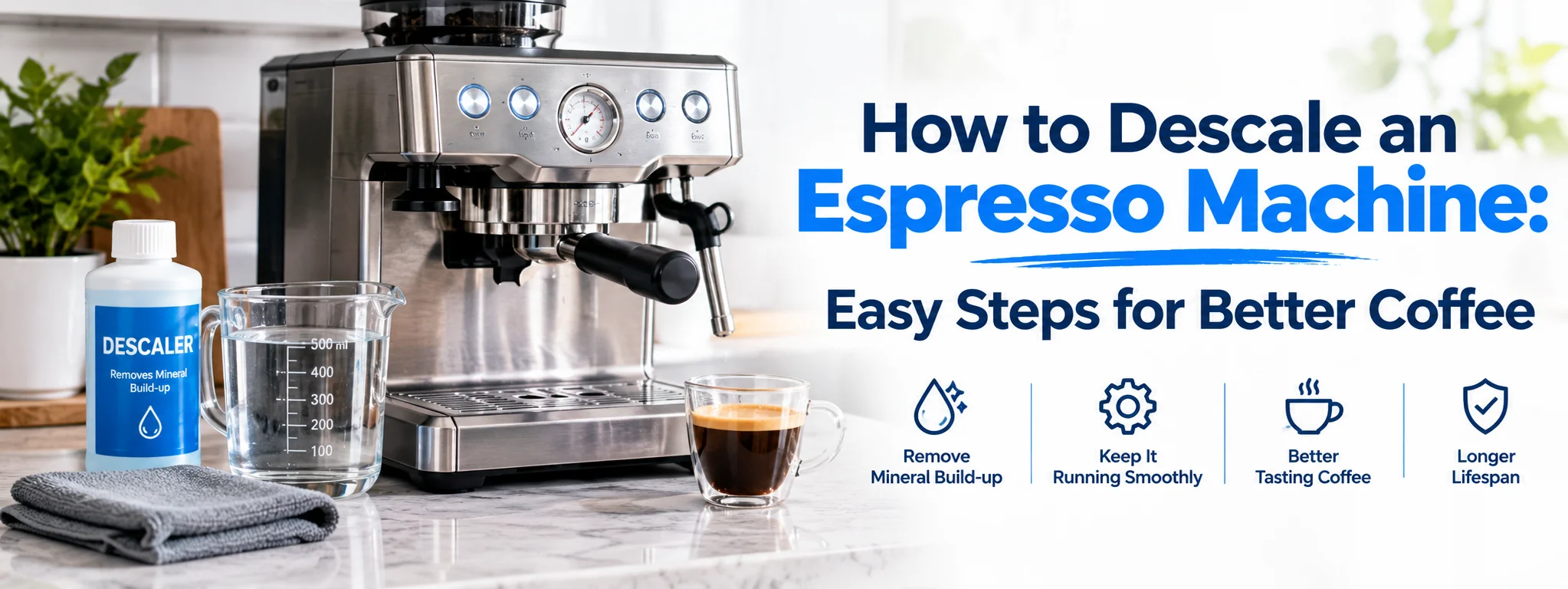
Learning how to descale an espresso machine is an important part of keeping your coffee equipment clean and your drinks tasting fresh. Over time, minerals from water can build up inside the machine, especially around the boiler, heating system, pipes, and water pathways. This buildup can affect water flow, temperature, brewing performance, and the flavor of your espresso.
Descaling is a simple maintenance task that can make a noticeable difference. With the right descaling solution and a few careful steps, you can remove mineral deposits and help your espresso machine work efficiently.
Why Descaling an Espresso Machine Matters
Water contains minerals such as calcium and magnesium. When water is heated repeatedly, these minerals can settle inside the machine and form a hard layer known as scale.
Heavy scale may cause several problems, including slower water flow, unusual noises, inconsistent temperatures, and weaker coffee extraction. It can also place additional pressure on internal components.
Regular cleaning removes coffee residue from the group head and Porterville, but cleaning alone does not remove mineral deposits. Descaling targets the buildup inside the water system.
Signs Your Espresso Machine Needs Descaling
Your machine may need attention if you notice:
- Water coming through the group head more slowly than usual.
- Coffee temperature becoming inconsistent.
- Strange noises during heating or brewing.
- Reduced steam pressure from the wand.
- A noticeable change in espresso flavor or extraction.
These signs do not always mean scale is the only problem, but they can indicate that maintenance is overdue.
How to Descale an Espresso Machine
Before starting, check your machine’s manual for specific instructions. Different models can have different descaling procedures, and some manufacturers recommend a particular cleaning product.
1. Empty the Water Reservoir
Turn off the espresso machine and allow it to cool if it has recently been used. Remove the water reservoir and empty any remaining water.
If the reservoir has visible residue, rinse it thoroughly with clean water before adding the descaling mixture.
2. Prepare the Descaling Solution
Use a descaling product designed for espresso machines and follow the dilution instructions on its packaging. Avoid guessing the concentration because using an overly strong mixture may damage certain internal parts.
Pour the prepared solution into the water reservoir.
3. Run the Solution Through the Machine
Place a large container under the coffee outlet and another suitable container under the steam or hot-water outlet if necessary.
Turn the machine on according to the manufacturer’s instructions. Run some of the solution through the brewing system and, where applicable, through the hot-water circuit.
Pause periodically if the manufacturer’s instructions recommend allowing the solution to sit inside the system. This gives the descale time to loosen stubborn mineral deposits.
4. Complete the Descaling Cycle
Continue the process until the recommended amount of solution has passed through the machine. Some automatic espresso machines have a dedicated descaling program that guides you through the process.
Do not rush this stage. A complete cycle helps the solution reach different internal pathways where scale may have accumulated.
5. Rinse the Machine Thoroughly
Once the descaling cycle is finished, empty and rinse the reservoir. Fill it with fresh water and run several cycles through the machine.
Fresh-water rinsing is essential because leftover descaling solution can affect the taste of coffee. Continue rinsing until there is no unusual smell or taste.
Espresso Machine Descaling Guide
| Maintenance Stage | Main Action | Purpose |
|---|---|---|
| Preparation | Empty and rinse reservoir | Remove old water and residue |
| Solution | Add recommended descale | Break down mineral deposits |
| Descaling | Run solution through system | Clean internal water pathways |
| Rinsing | Run fresh water cycles | Remove remaining solution |
| Final Check | Brew and inspect performance | Confirm normal operation |
How Often Should You Descale?
The ideal schedule depends on water hardness, how frequently you make coffee, and the machine itself. A machine used several times every day with hard water may require more frequent descaling than one used occasionally with filtered or soft water.
Instead of relying on a single schedule, pay attention to your machine’s maintenance indicator and manufacturer’s recommendations.
Using filtered water can also reduce mineral accumulation. However, filtration does not necessarily eliminate the need for descaling.
Tips for Better Espresso Machine Maintenance
A good maintenance routine does more than protect the machine. It can also help preserve the quality of your espresso.
- Empty and rinse the water reservoir regularly.
- Clean the group head after frequent use.
- Wash the Porterville and basket to remove coffee oils.
- Wipe and purge the steam wand after steaming milk.
- Follow the manufacturer’s recommended descaling schedule.
Common Mistakes to Avoid
One common mistake is using household cleaning products that are not intended for espresso machines. These products may contain ingredients unsuitable for internal components.
Another mistake is skipping the rinsing stage. Even an effective descaling product needs to be flushed from the system properly before coffee is prepared.
Avoid forcing valves, removing internal components, or taking apart the machine unless the manufacturer specifically allows it. Internal espresso machine parts can be delicate, and unnecessary disassembly may create new problems.
Final Thoughts
Knowing how to descale an espresso machine gives you a simple way to support cleaner water flow, reliable brewing, and better-tasting coffee. Mineral buildup is a natural result of using water, but regular maintenance can keep it under control.
Use an appropriate descaling solution, follow the machine’s instructions, complete the entire cycle, and rinse thoroughly afterward. Combined with routine cleaning, this powerful maintenance habit can help your espresso machine deliver enjoyable coffee for longer.
FAQs
1. Can I descale an espresso machine with vinegar?
Some manufacturers may allow vinegar, but many recommend a dedicated descaling solution. Always check the machine’s instructions first.
2. How long does descaling take?
The process varies by machine. Automatic models may take around 20–40 minutes, while manual procedures can take longer.
3. How do I know if my machine has scale?
Slow water flow, temperature changes, unusual noises, and reduced steam performance can be possible signs of mineral buildup.
4. Should I rinse after descaling?
Yes. Thorough rinsing removes remaining descaling solution and helps prevent unwanted flavors in your coffee.
5. Can filtered water prevent scale?
Filtered water can reduce mineral buildup, especially when it lowers water hardness, but it may not completely prevent scale formation.