
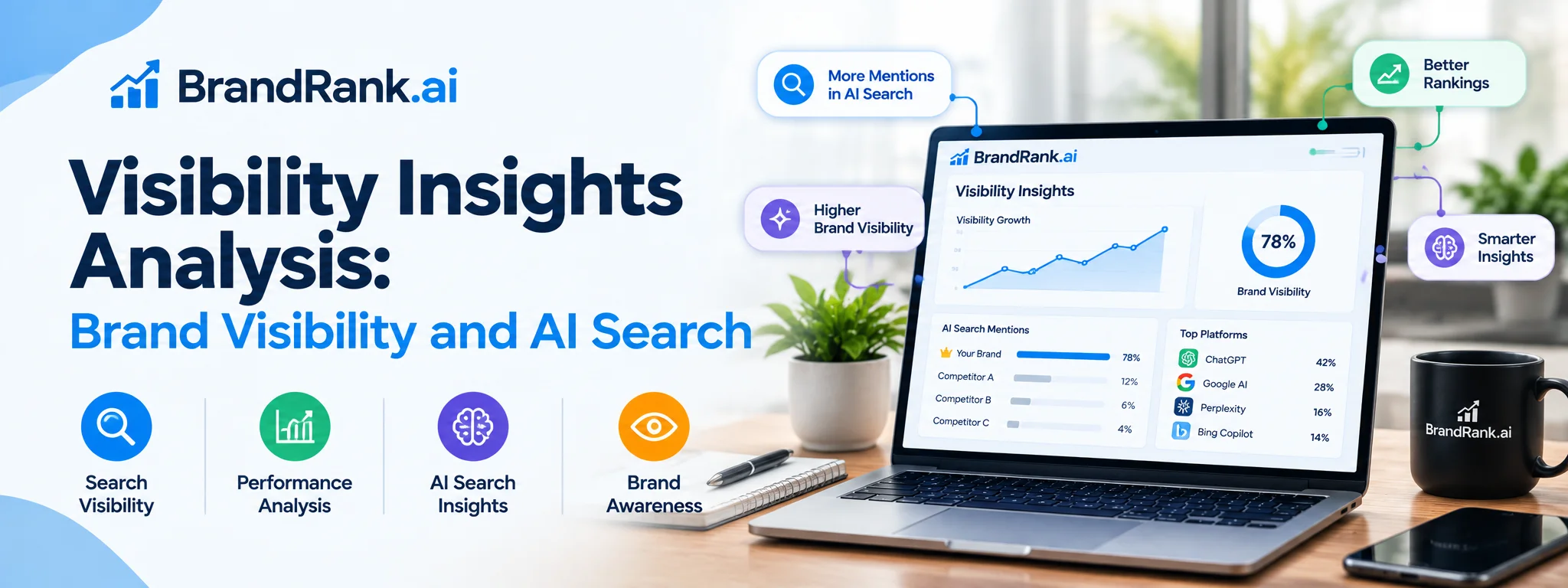
BrandRank.ai Visibility Insights Analysis reflects an emerging approach to understanding how brands appear across AI-powered search experiences. Traditional SEO has often focused on rankings, clicks, keywords, and back links. AI search introduces another layer: whether a brand is recognized, mentioned, represented accurately, and surfaced when users ask conversational questions.
As search behavior continues to evolve, businesses need broader visibility strategies. Instead of concentrating only on conventional search results, marketers can examine how artificial intelligence systems interpret brand information, connect entities, and generate answers. This makes visibility analysis an increasingly valuable part of modern digital marketing.
BrandRank.ai Visibility Insights Analysis and Modern Search
Search engines have changed considerably over the years. Users now frequently ask complete questions instead of entering short keyword phrases. AI-powered interfaces can summarize information, compare services, answer questions, and recommend resources.
BrandRank.ai Visibility Insights Analysis can be viewed within this changing environment as a way to examine brand presence across AI-driven search experiences.
From Rankings to Brand Recognition
Traditional SEO commonly measures where a webpages appears for a particular query. AI search can work differently. A response may contain information gathered from several sources, meaning a brand could influence an answer without receiving a conventional search-result position.
This creates several important areas to monitor:
- Brand mentions within AI-generated responses
- Frequency of brand appearances for relevant questions
- Accuracy and consistency of brand information
- Context in which a brand is presented
- Visibility compared with other entities in the same category
These signals provide a broader picture of digital presence.
How AI Search Changes Brand Visibility
AI search systems can interpret relationships between topics, organizations, products, services, and people. Instead of matching a query only with individual keywords, they can consider the meaning and context behind a question.
For businesses, this means publishing useful and trustworthy information becomes increasingly important.
Context Matters
A brand may have strong visibility for one topic but limited recognition in another. For example, a software company could appear frequently for questions about its main product while remaining almost invisible for broader industry questions.
Understanding these differences can help marketers identify opportunities for stronger topical coverage.
Entity Recognition
AI systems often need to understand entities and their relationships. Consistent brand names, descriptions, product information, company details, and references across reputable websites can help establish a clearer digital identity.
This does not guarantee inclusion in AI-generated answers, but consistent information can make a brand easier to understand within the broader online ecosystem.
Key Elements of AI Visibility Analysis
A useful visibility analysis should examine multiple dimensions rather than relying on one metric.
Mention Frequency
Tracking how often a brand appears in relevant AI-generated answers can reveal whether it has meaningful visibility around important topics.
Sentiment and Context
A simple mention count may not tell the complete story. The surrounding context matters. A brand could be mentioned frequently but represented inconsistently. Reviewing descriptions, associations, and factual accuracy can therefore provide more useful insights.
Competitor Presence
Comparing brand mentions across the same group of queries can reveal differences in digital visibility. This type of analysis can highlight subjects where competitors receive greater recognition and areas where additional content may be useful.
Building Stronger AI Search Visibility
Improving AI visibility is not simply about repeating a company name. Sustainable visibility generally requires useful information, clear positioning, authoritative references, and a technically accessible website.
Create Clear, Helpful Content
Content should answer real questions directly. Detailed guides, comparisons, explanations, FAQs, original research, and product documentation can give search systems more meaningful information to interpret.
Important practices include:
- Use clear descriptions of products and services.
- Cover related questions instead of repeating one keyword.
- Keep business information consistent across important platforms.
- Support factual claims with credible sources.
- Update outdated information when circumstances change.
Strengthen Digital Authority
References from reputable publications, industry organizations, directories, and relevant websites can contribute to a stronger online presence. The quality and relevance of those references are more meaningful than simply collecting large numbers of mentions.
A coherent digital footprint can also reduce confusion when multiple sources describe the same organization.
Measuring Brand Visibility Across AI Search
A structured measurement process can help businesses understand changes over time.
| Visibility Area | What to Examine | Useful Insight |
| Brand Mentions | Frequency of appearances | Recognition |
| Query Coverage | Relevant questions producing mentions | Topic reach |
| Context | How the brand is described | Brand representation |
| Competitors | Other brands appearing in answers | Market visibility |
| Accuracy | Correctness of information | Information quality |
Challenges in AI Visibility Tracking
AI-generated answers can vary depending on the system, query wording, location, language, available sources, and time. Because of this, one observation should not automatically be treated as a permanent measurement.
Dynamic Search Results
AI systems can change their responses as models, retrieval systems, source databases, and ranking mechanisms evolve. A brand that appears for a query today may receive different treatment later.
For this reason, repeated testing across a consistent set of queries can produce more useful observations than relying on isolated checks.
Accuracy and Source Quality
AI-generated information can occasionally contain outdated or inaccurate details. Businesses should monitor how their brand is represented and make important information easy to verify through reliable public sources.
Final Thoughts
BrandRank.ai Visibility Insights Analysis represents the broader shift from traditional search rankings toward a more comprehensive understanding of brand presence in AI-powered search. Visibility now involves more than occupying a position on a results page. It can also involve recognition, context, accuracy, topical relevance, and how consistently a brand is represented across digital sources.
Businesses that create useful content, maintain accurate information, build credible references, and monitor AI search experiences can better understand this changing environment. As search becomes increasingly conversational and intelligent, careful visibility analysis can provide valuable insights for building a stronger and more recognizable digital presence.
FAQs
1. What is AI search visibility?
AI search visibility refers to how frequently and accurately a brand appears in AI-generated search responses.
2. Why does brand visibility matter?
Strong visibility can help users encounter a brand when researching relevant products, services, or topics.
3. Can SEO improve AI visibility?
Traditional SEO practices can support discover ability, while useful content, clear information, and authoritative references can also contribute to broader AI visibility.
4. How can AI visibility be measured?
Businesses can monitor brand mentions, query coverage, context, competitors, and information accuracy across repeated searches.
5. Does one AI search result prove visibility?
No. AI responses can vary, so repeated testing across relevant queries provides a more reliable picture.