
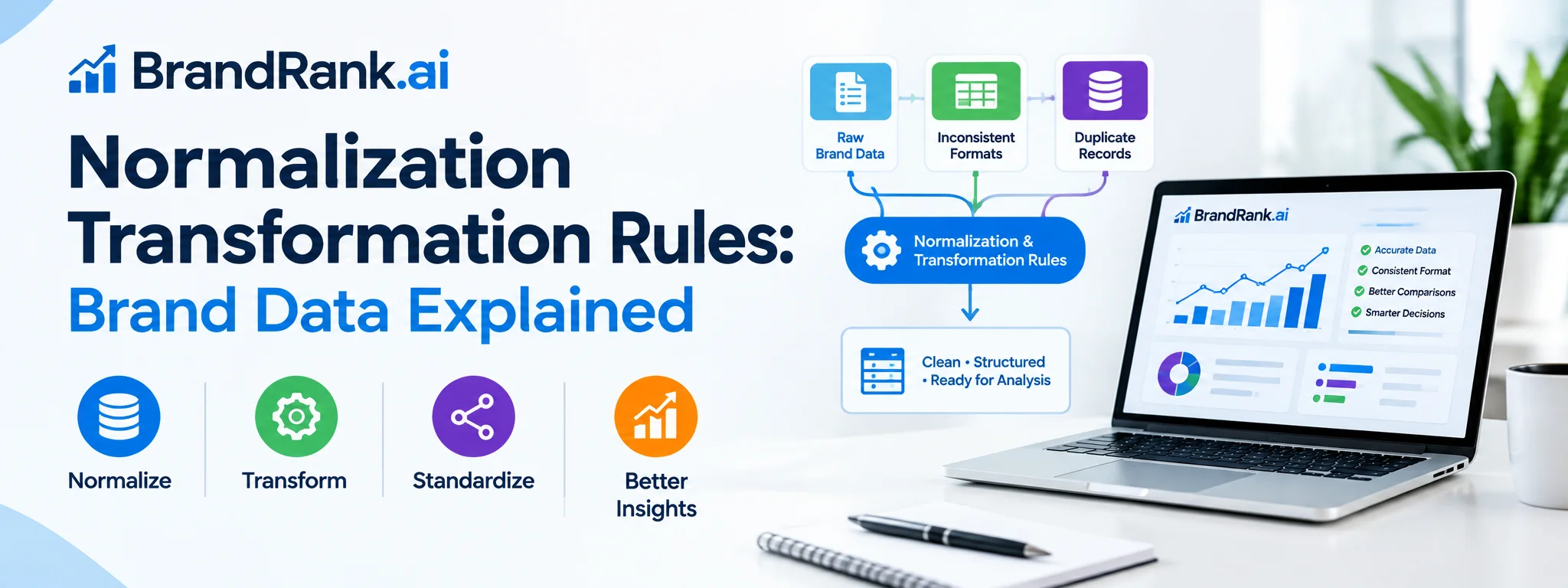
BrandRank.ai Normalization Transformation Rules provide a structured way to understand how brand information can be cleaned, standardized, and transformed for consistent digital analysis. Brand data often comes from different sources, and the same company may appear with variations in spelling, capitalization, punctuation, abbreviations, or naming formats. Without normalization, these differences can create duplicate records, inaccurate comparisons, and confusing results.
Why BrandRank.ai Normalization Transformation Rules Matter
Brand information can become complicated when it is collected from websites, directories, social platforms, databases, and other digital sources. One source may list a company using its full legal name, while another uses a shortened version or different punctuation.
Creating Consistent Brand Records
Normalization attempts to bring different versions of similar information into a consistent format. This does not necessarily mean removing meaningful distinctions. Instead, it creates practical rules for deciding how information should be represented.
For example, variations such as:
- Example Brand Inc.
- EXAMPLE BRAND, INC.
- Example Brand
- example-brand
may need to be interpreted according to the purpose of the database. A well-defined transformation process can reduce unnecessary variation while preserving important information.
Key BrandRank.ai Normalization Transformation Rules
The exact rules used by a particular system depend on its data model and objectives. However, common normalization practices generally focus on formatting, consistency, identity matching, and data quality.
Standardizing Capitalization
Capitalization differences can make identical names appear different to automated systems. A normalization process may convert text into a consistent capitalization format.
For instance, “Global Media,” “GLOBAL MEDIA,” and “global media” could be standardized for comparison.
Removing Unnecessary Characters
Punctuation, extra spaces, symbols, and formatting marks can sometimes create artificial differences between records. Transformation rules may remove or standardize these elements when they do not contribute meaningful identity information.
However, blindly removing characters can create problems. Some symbols may be part of an official brand identity, so transformations should be carefully defined.
Managing Abbreviations
Businesses frequently use abbreviations. A company may be represented by its full name in one database and an abbreviated form elsewhere.
Normalization can establish consistent mappings when those relationships are known. This helps reduce duplicate entries and improves the accuracy of brand matching.
Brand Data Transformation Workflow
A useful normalization workflow typically moves through several stages. Each stage addresses a different aspect of data quality.
1. Data Collection
The first stage involves gathering brand information from relevant sources. Data may include names, domains, categories, descriptions, locations, and identifiers.
2. Cleaning
Collected information is reviewed for unnecessary spaces, inconsistent capitalization, malformed entries, duplicate values, and formatting issues.
3. Transformation
The cleaned data is converted according to predefined rules. This can include text normalization, abbreviation handling, character replacement, or standardized naming conventions.
4. Matching
Records can then be compared to determine whether different entries represent the same brand. Matching should consider more than simple spelling because two different businesses can have similar names.
5. Validation
The final stage checks whether the transformed information remains accurate. Validation is essential because an overly aggressive transformation can combine unrelated brands.
Common Transformation Areas
| Data Element | Typical Transformation | Main Purpose |
| Brand name | Case and spacing standardization | Consistent comparison |
| Punctuation | Controlled removal or replacement | Reduce formatting differences |
| Abbreviations | Approved mapping | Improve identity matching |
| Domain | Format standardization | Reliable website comparison |
| Category | Controlled vocabulary | Consistent classification |
Improving Brand Data Quality
High-quality brand data depends on clear rules and regular review. Normalization should not be treated as a one-time cleanup project because digital information changes continuously.
Use Controlled Rules
A documented rule set makes transformations predictable. Teams can understand why a particular value was changed and reproduce the same process for new records.
Preserve Original Information
It is often useful to retain the original value alongside the normalized value. This creates a traceable relationship between source information and transformed information.
This approach provides an important safeguard. If a transformation produces an unexpected result, analysts can return to the original record and investigate the change.
Monitor Exceptions
Not every brand follows ordinary naming patterns. Some companies use unusual spellings, multiple brands, regional identities, or distinctive punctuation.
Maintaining an exception process allows unusual cases to receive additional review rather than being incorrectly transformed.
Benefits of Effective Normalization
A well-designed normalization system can provide several practical advantages:
- Improved data consistency across different sources.
- Reduced duplication when equivalent brand records use different formats.
- Better search performance through standardized values.
- More reliable analytics when comparable records follow common rules.
- Easier maintenance because future data can follow established standards.
Challenges to Consider
Normalization can introduce risks if transformation rules are too aggressive. Removing too much information may cause different brands to appear identical. Similarly, automatically expanding abbreviations without verification can produce incorrect relationships.
Context is therefore essential. A brand name should be evaluated alongside relevant identifiers, domains, locations, categories, and other available information.
Balancing Automation and Review
Automation can process large datasets quickly, but unusual records may require human review. A practical system can combine automated transformations with exception handling and quality checks.
This balanced approach can make brand data management more efficient without sacrificing accuracy.
Final Thoughts
BrandRank.ai Normalization Transformation Rules represent an important concept for organizing brand information in a consistent and useful manner. Standardizing names, managing formatting differences, handling abbreviations, and validating transformed records can make digital datasets easier to search and analyze.
The strongest approach is not simply to transform as much information as possible. Instead, normalization should preserve meaningful identity while removing unnecessary variation. With documented rules, original-value preservation, validation, and careful exception handling, organizations can build cleaner and more dependable brand datasets.
FAQs
1. What is brand data normalization?
Brand data normalization is the process of standardizing brand information so similar records can be compared more consistently.
2. Why are transformation rules important?
They create predictable methods for cleaning and restructuring brand information across different sources.
3. Can normalization remove duplicate brands?
It can help identify duplicate records caused by differences in spelling, capitalization, spacing, or formatting.
4. Should original brand data be preserved?
Yes. Keeping original values provides useful traceability and makes it easier to review transformations.
5. Can all brand names be automatically normalized?
Not always. Unusual names and ambiguous records may require additional context or manual review.
One Reply to “BrandRank.ai Normalization Transformation Rules: Brand Data Explained”